
Friday, September 3, 2010
From the Vermont and the New Hampshire Valley Regional Disaster Operations Center Daily Operations Unit Watch Floor

You hear us talking about all the conference calls that we participate in when we are in an intensified state of readiness and we thought we would give you just a quick overview of the number of calls that we will be participating in today.
First thing this morning we will be participating in the FEMA Voluntary Agencies Active in Disaster conference call; followed by a call with all the State Support Functions (SSFs) and Vermont Emergency Management. At 12:30 we will be hosting our regional Disaster Leadership Team conference call and will then participate in the National Disaster Operations Center (NHQ-DOC) call with all of the northeastern states. These are the calls that are currently scheduled and we are always prepared to participate in any others that occur during the day.
The calls are a very essential part of the Intel Gathering and Situational Awareness that provides the foundation for our being ready to respond to whatever need occurs as the result of any of the storms that we are following.


Thursday, September 2, 2010
Red Cross Ready to Respond to Hurricane Earl
 |
| Glen Beasley, Executive Director of The American Red Cross Cape and the Islands Chapter shows some of the supplies that have been pre-positioned on Cape Cod and the Islands in advance of Hurricane Earl. Cots, comfort kits, and blankets are some of the items clients will be able to utilize at shelters. Photo Credit: Donna Morrissey/American Red Cross |
Red Cross shelters are expected to open this afternoon in North Carolina, and additional shelters are poised to open in New York, Massachusetts and Rhode Island, with emergency planning continuing in ten other states along the coast. Up-to-date shelter location information is readily available on www.redcross.org by clicking “Find a Shelter.”
Hurricane and tropical storm watches and warnings have been issued by the National Hurricane Center from North Carolina to Maine. More than 350 trained Red Cross disaster workers have been deployed to North Carolina, Massachusetts and Rhode Island, along with more than 60 emergency vehicles.
“Hurricane Earl is big and powerful, and even a glancing blow will mean high winds and flooding,” said Joe Becker, senior vice president, Red Cross Disaster Services. “The Red Cross is ready – from the Carolina coast to Maine – and people in those areas should be prepared, too. We urge residents to stay informed and be prepared should the storm affect their areas.”
In North Carolina, additional Red Cross shelters are on standby to open if needed. The Red Cross has deployed 183 disaster workers to the state to support efforts there, along with 37 emergency response vehicles and two trailers of additional disaster relief supplies to add to what is already in the state.
Should the storm turn toward the New York coastal area, shelter locations have been identified in Nassau and Suffolk counties and New York City.
Further up the coast in Massachusetts and Rhode Island, shelters are ready to open and 171 disaster workers have deployed to the area to assist those who may be affected by the Category 4 hurricane. The Red Cross has 24 emergency response vehicles in the two states, with two trailers of disaster relief supplies on the way to supplement what is already available in the area.
The Red Cross is working with various state, county and local government officials to determine what their areas will need. Emergency planning is taking place in North Carolina, South Carolina, New York, Massachusetts, Virginia, Maryland, Delaware, New Jersey, Pennsylvania, Connecticut, Rhode Island, Vermont, New Hampshire and Maine.
People who are evacuating can register on the Red Cross Safe and Well Website, accessible at www.redcross.org, so that friends and relatives can find out how they are. For those who don’t have internet access, call 1-800-RED CROSS (1-800-733-2767) to register yourself and your family. Follow the prompts for disaster information.
The Red Cross pre-positions supplies near disaster prone areas to speed up the time it takes to respond to storms like Hurricane Earl. This ability to respond quickly is due to the financial support in advance of disasters by companies and organizations that are members of the Red Cross Annual Disaster Giving Program (ADGP). Members of the ADGP program include Altria Group, American Express, AXA Foundation, Cisco Foundation, ConAgra Foods, Darden Restaurants, Inc., FedEx Corporation, GE Foundation, General Motors Foundation, The Home Depot Foundation, John Deere Foundation, Kimberly-Clark Corporation. Lowe’s Companies, Inc., Merck, Morgan Stanley, Nationwide Insurance Foundation, Northrop Grumman, Ryder Charitable Foundation, State Farm, State Street Foundation, Target, The TJX Companies, Inc., UnitedHealthcare and UPS.
The storms in the Atlantic Ocean are causing powerful rip currents. The Red Cross advises anyone visiting the shore areas to swim only on lifeguard protected beaches and within designated swimming areas.
To make a financial donation to the Red Cross to help people affected by this storm and other disasters here in the United States and around the world, people can click, call or text – visit www.redcross.org, call 1-800-RED CROSS, or text the word REDCROSS to 90999 to make a $10 donation. The storm may also impact blood collections in the affected areas. To find out how you can be a blood donor, visit www.redcrossblood.org
Central VT/NH Valley Chapter Volunteer Deploying to Hurricane Earl
Janet Ducharme an experienced volunteer with the Central VT/NH Valley Chapter of the American Red Cross is deploying to the Red Cross' Hurricane Earl Relief Operation in Massachusetts and Rhode Island. Janet will be departing from her home in Lebanon, NH on the morning of September 3rd and will travel to Warwick, RI where the headquarters of the operation is currently located. Janet has committed to a minimum 3-week assignment and has been assigned as a member of the pre-landfall leadership team. She will be supporting Disaster Assessment activities in the area should the storm make landfall anywhere in the operational area.
Stay posted to our blog for additional updates on Red Cross Hurricane Readiness Activities.
Stay posted to our blog for additional updates on Red Cross Hurricane Readiness Activities.
Wednesday, September 1, 2010
Hurricane Earl Readiness and Response
Hurricane Earl Threatens East Coast
All eyes are on the Atlantic as people across the East Coast prepare for a potential impact from Hurricane Earl, currently a Category 4 storm. As we encourage all Americans to prepare themselves and their families for this storm, the Red Cross is also getting ready for landfall in a number of states, many of which haven’t seen a major hurricane in decades.
American Red Cross chapters in North Carolina, New York, Connecticut, Rhode Island, Massachusetts and Maine are on alert and beginning to put their plans into action. Emergency response vehicles (ERVs) are on-call to potentially distribute meals, and other needed supplies. Trained and experienced disaster volunteers are being mobilized to move to potential impact zones in the Outer Banks, Long Island and Cape Cod. Additional volunteers are on stand-by in nearly every state along the eastern seaboard to open shelters in the case of evacuations.
Hurricane Earl has an extremely wide eye – 16 miles – and we anticipate that people across the coast, and even inland, will feel the impact of this storm. In addition, another storm, which may become Hurricane Fiona, is just days behind Earl, following his path.
Hurricane Season 2010
Hurricane Earl is already the fifth named-storm this hurricane season, and NOAA continues to predict an extremely active season. More than 35 million Americans live in regions threatened by hurricanes. With your support, the American Red Cross helps communities across the country prepare for, respond to and recover
from hurricanes every year.
This year, NOAA predicts between 14-23 named storms will occur during hurricane season, which begins June 1 and runs through November 30. The seasonal average is 11 named storms, but a combination of stormconducive weather patterns, warm water temperatures and current storm trends led researchers to predict an increased level of activity for this season. Of the predicted storms, 8 to 14 are expected to be hurricanes.
The American Red Cross Disaster Relief and Hurricane Readiness
While no one can predict with perfect certainty when or where hurricanes will strike, the American Red Cross works every day to help prepare communities for these storms and minimize their impact. We sustain a nationwide infrastructure ready to spring into action within hours of a hurricane and prepared to stay for as long as it takes to meet the needs of those affected.
Thesupport of the public enables the Red Cross to be better prepared and improve the quality of service we provide to our clients. With the increased threat we see this year, we have already pre-positioned additional supplies across the gulf region, like 32,000 cots, 65,000 blankets and 120,000 shelf-stable meals. We also have nearly 90,000 disaster-trained volunteers prepared to serve in communities across the country and more than 20 warehouses strategically placed across the country, filled with shelf-stable food, water, nursing supplies, and cleanup and comfort kits, all ready to be deployed at a moment’s notice. Our diverse partner network comprised of national and local organizations is ready to provide additional resources and expertise
during times of disaster.
In addition, donors’ support enables the Red Cross to maintain:
• 320 Emergency Response Vehicles
• Enough cots and blankets for 350,000 people
• 56,000 shelter locations
• The capability to serve 1 million meals every day for six days
In the wake of hurricanes, the Red Cross begins providing services immediately. Shelters are opened, meals served, families and loved ones reconnected, medical and mental health needs met, and recovery plans formed. In the aftermath of a hurricane, those impacted have a multitude of questions about what the future will hold. The public's support helps the Red Cross provide the answers.
The American Red Cross – Preparing our Communities
While the American Red Cross works daily to improve our organizational preparedness and service delivery, true readiness is possible only with an informed and active public. To that end, the Red Cross strives to achieve fully prepared and educated communities.
Every year the Red Cross encourages families to prepare for the oncoming hurricane season with a Hurricane Safety Checklist. We provide instructions on how to build a disaster supply kit, develop an evacuation plan, safeguard homes and protect possessions, and keep you and your family safe during and after a hurricane strikes.
We provide critical instruction in CPR, First Aid and Preparedness that train everyday people to become lifesavers in times of emergency. In 2009, approximately 10 million people learned lifesaving skills through a Red Cross class and approximately 5 million attended a Red Cross disaster education presentation. A person learns skills in a Red Cross class 41,000 times per-day that will help them protect and assist
their friends and neighbors during times of emergency.
Support of Our Donors
You can help people affected by disasters like Hurricane Earl, as well as countless crises at home and around the world, by making a donation to support American Red Cross Disaster Relief. Your gift enables the Red Cross to prepare for and provide shelter, food, emotional support and other assistance in
response to disasters. Visit http://www.redcross.org/ or call 1-800-RED-CROSS. Contributions may also be sent to your local American Red Cross chapter or to the American Red Cross, P.O. Box 37243, Washington, DC 20013.
All eyes are on the Atlantic as people across the East Coast prepare for a potential impact from Hurricane Earl, currently a Category 4 storm. As we encourage all Americans to prepare themselves and their families for this storm, the Red Cross is also getting ready for landfall in a number of states, many of which haven’t seen a major hurricane in decades.
American Red Cross chapters in North Carolina, New York, Connecticut, Rhode Island, Massachusetts and Maine are on alert and beginning to put their plans into action. Emergency response vehicles (ERVs) are on-call to potentially distribute meals, and other needed supplies. Trained and experienced disaster volunteers are being mobilized to move to potential impact zones in the Outer Banks, Long Island and Cape Cod. Additional volunteers are on stand-by in nearly every state along the eastern seaboard to open shelters in the case of evacuations.
Hurricane Earl has an extremely wide eye – 16 miles – and we anticipate that people across the coast, and even inland, will feel the impact of this storm. In addition, another storm, which may become Hurricane Fiona, is just days behind Earl, following his path.
Hurricane Season 2010
Hurricane Earl is already the fifth named-storm this hurricane season, and NOAA continues to predict an extremely active season. More than 35 million Americans live in regions threatened by hurricanes. With your support, the American Red Cross helps communities across the country prepare for, respond to and recover
from hurricanes every year.
This year, NOAA predicts between 14-23 named storms will occur during hurricane season, which begins June 1 and runs through November 30. The seasonal average is 11 named storms, but a combination of stormconducive weather patterns, warm water temperatures and current storm trends led researchers to predict an increased level of activity for this season. Of the predicted storms, 8 to 14 are expected to be hurricanes.
The American Red Cross Disaster Relief and Hurricane Readiness
While no one can predict with perfect certainty when or where hurricanes will strike, the American Red Cross works every day to help prepare communities for these storms and minimize their impact. We sustain a nationwide infrastructure ready to spring into action within hours of a hurricane and prepared to stay for as long as it takes to meet the needs of those affected.
Thesupport of the public enables the Red Cross to be better prepared and improve the quality of service we provide to our clients. With the increased threat we see this year, we have already pre-positioned additional supplies across the gulf region, like 32,000 cots, 65,000 blankets and 120,000 shelf-stable meals. We also have nearly 90,000 disaster-trained volunteers prepared to serve in communities across the country and more than 20 warehouses strategically placed across the country, filled with shelf-stable food, water, nursing supplies, and cleanup and comfort kits, all ready to be deployed at a moment’s notice. Our diverse partner network comprised of national and local organizations is ready to provide additional resources and expertise
during times of disaster.
In addition, donors’ support enables the Red Cross to maintain:
• 320 Emergency Response Vehicles
• Enough cots and blankets for 350,000 people
• 56,000 shelter locations
• The capability to serve 1 million meals every day for six days
In the wake of hurricanes, the Red Cross begins providing services immediately. Shelters are opened, meals served, families and loved ones reconnected, medical and mental health needs met, and recovery plans formed. In the aftermath of a hurricane, those impacted have a multitude of questions about what the future will hold. The public's support helps the Red Cross provide the answers.
The American Red Cross – Preparing our Communities
While the American Red Cross works daily to improve our organizational preparedness and service delivery, true readiness is possible only with an informed and active public. To that end, the Red Cross strives to achieve fully prepared and educated communities.
Every year the Red Cross encourages families to prepare for the oncoming hurricane season with a Hurricane Safety Checklist. We provide instructions on how to build a disaster supply kit, develop an evacuation plan, safeguard homes and protect possessions, and keep you and your family safe during and after a hurricane strikes.
We provide critical instruction in CPR, First Aid and Preparedness that train everyday people to become lifesavers in times of emergency. In 2009, approximately 10 million people learned lifesaving skills through a Red Cross class and approximately 5 million attended a Red Cross disaster education presentation. A person learns skills in a Red Cross class 41,000 times per-day that will help them protect and assist
their friends and neighbors during times of emergency.
Support of Our Donors
You can help people affected by disasters like Hurricane Earl, as well as countless crises at home and around the world, by making a donation to support American Red Cross Disaster Relief. Your gift enables the Red Cross to prepare for and provide shelter, food, emotional support and other assistance in
response to disasters. Visit http://www.redcross.org/ or call 1-800-RED-CROSS. Contributions may also be sent to your local American Red Cross chapter or to the American Red Cross, P.O. Box 37243, Washington, DC 20013.
From the Disaster Operations Center Watch Room - Hurricane Earl
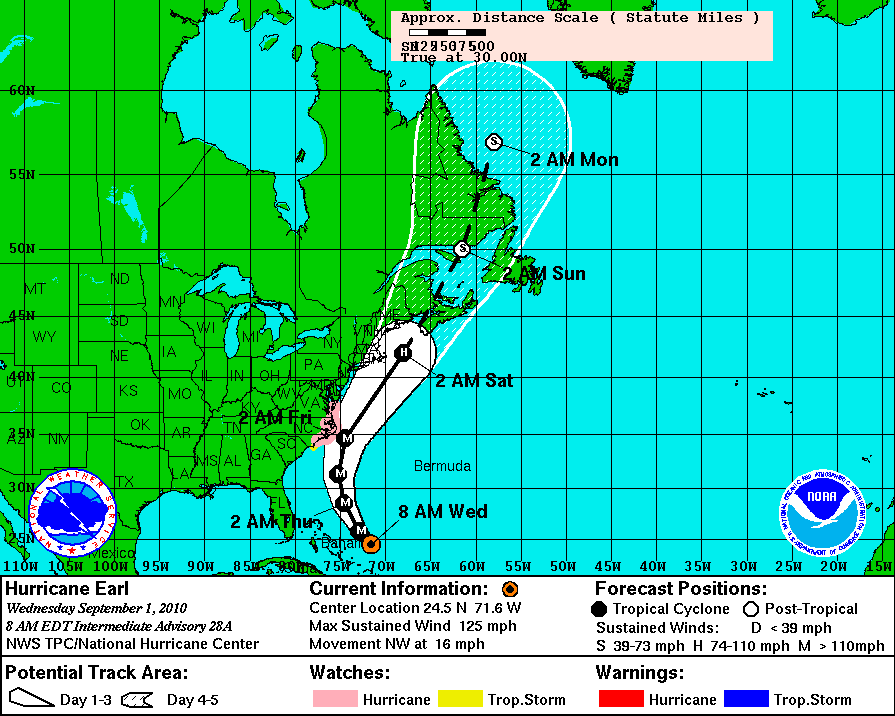 |
| Hurricane Earl Tracking Map |
But we're doing more than watching. We are also making e-mail and phone contacts with all of our volunteer personnel requesting information on their availability for the next few weeks and are readying equipment resources so we are prepared to deploy them should they be needed. A team of two drivers has been recruited for the Burlington based Emergency Response Vehicle (ERV) and we are in the process of recruiting personnel to deploy with the Rutland based ERV should either of these vehicles be needed.
We continue to review our preparedness plans and procedures confirming that we are prepared to meet the needs in Vermont and the New Hampshire Valley should either of the storms move a little more to the west and have a direct impact on our region.
As can be expected, information is essential during events like these and the number of conference calls required to keep everyone on the same page picks up quite considerably. This time is no different and personnel in Disaster Services, Fund Raising, Public Affairs and others have been actively engaged in these discussions.
We will continue to share information as it becomes available here on our blog. Stay tuned.
Subscribe to:
Posts (Atom)